A system we built. The figures below are modelled at a representative scale rather than the client’s actual numbers, which are confidential — so you can substitute your own. How we build these numbers →
Challenge
Organizations face devastating costs from employee turnover that goes far beyond recruitment expenses. High-performing employees leave unexpectedly, taking institutional knowledge and disrupting team dynamics, while companies scramble to replace talent in competitive markets. Most businesses underestimate the true cost of attrition—lost productivity, training investments, and reduced morale—making it impossible to prioritize effective retention strategies.
Solution
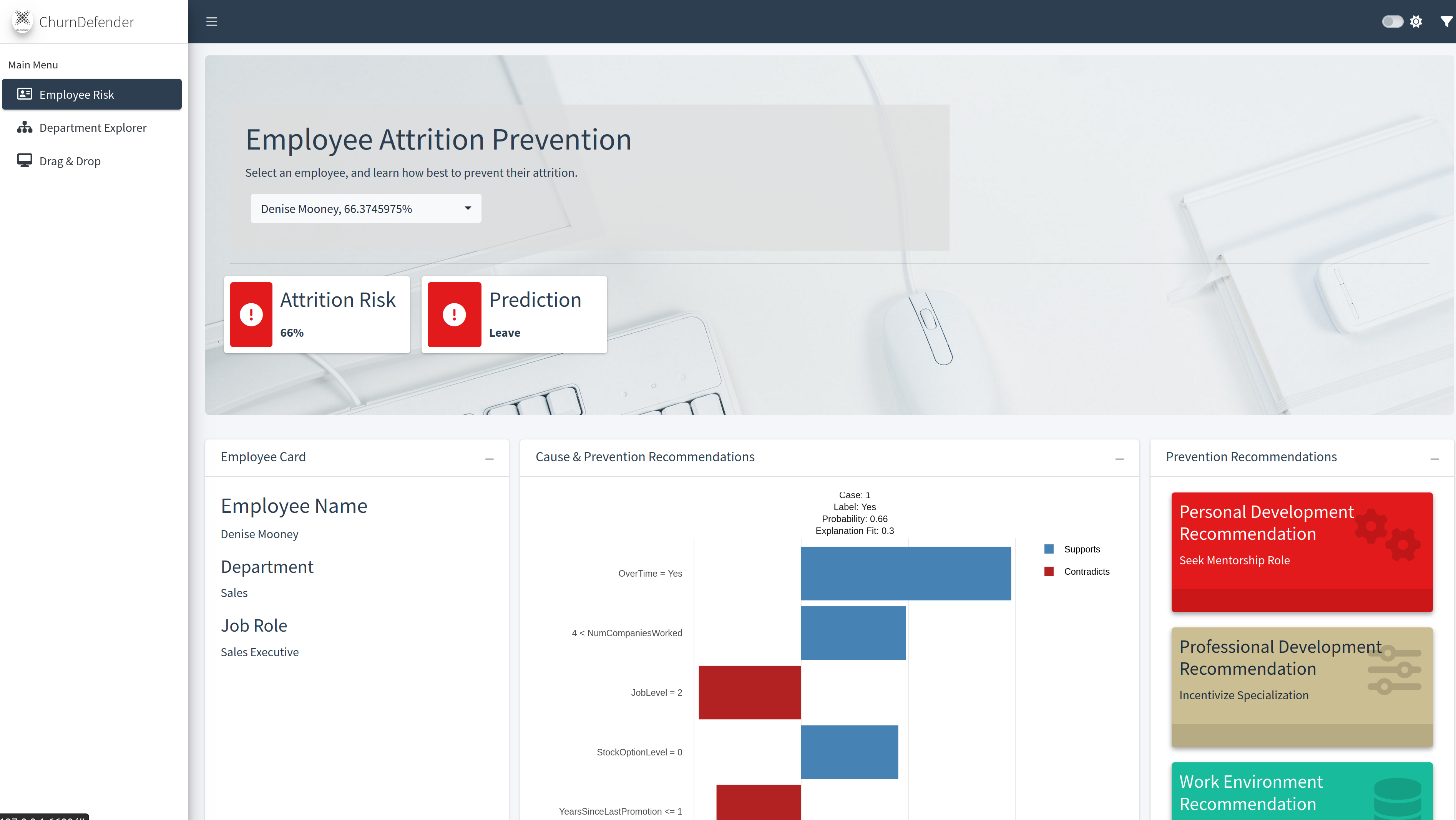
Intelligent employee retention platform that analyzes workforce data to identify at-risk employees before they decide to leave. The system evaluates multiple factors including performance metrics, engagement patterns, career progression, and compensation benchmarks to calculate personalized attrition risk scores and recommend targeted intervention strategies for each employee.
ROI
Worked at the scale of a mid-size company with 1,000 employees and 20% annual turnover. Every figure comes from the inputs — swap them for yours and the outputs follow. How we build these numbers →
Inputs — what we assume about the business
| Assumption | Value |
|---|---|
| Headcount | 1,000 |
| Annual turnover | 20% (200 people) |
| Recruitment and onboarding cost per hire | $20K |
| Annual recruitment and onboarding | $4M (200 × $20K) |
| Productivity lost to transitions and knowledge gaps | $6M/year |
| Emergency hiring, contractor rates and overtime cover | $800K/year |
| Revenue missed through delayed projects | $1.2M/year |
| Training invested in people who then leave | $400K/year |
Outputs — what attrition prediction changes
| Lever | Improvement | Arithmetic | Impact |
|---|---|---|---|
| Turnover | 20% → 12%, a 40% reduction | 40% × $4M | $1.6M |
| Productivity | 60% of flagged at-risk top performers retained | 60% × $6M | $3.6M |
| Emergency staffing | down 62% | 62% × $800K | $500K |
| Delayed project revenue | 58% recovered | 58% × $1.2M | $700K |
| Training investment | 60% preserved | 60% × $400K | $240K |
| Total annual impact | $6.64M |
Retention: turnover falling from 20% to 12% keeps 80 people a year.
Benefits
- Predictive Intelligence: Advanced analytics identify employees at risk of leaving 3-6 months before they make the decision, providing sufficient time for meaningful intervention and retention efforts.
- Targeted Interventions: Personalized recommendations for each at-risk employee enable managers to address specific concerns—whether compensation, career development, work-life balance, or management issues.
- Cost Visibility: Clear quantification of hidden attrition costs helps leadership understand the true financial impact and justify investment in retention programs and employee satisfaction initiatives.
- Department Insights: Identify patterns and anomalies across teams, departments, and managers to address systemic issues that drive turnover before they spread organization-wide.
- Strategic Workforce Planning: Long-term attrition forecasting enables proactive hiring, succession planning, and skill development to maintain operational continuity and competitive advantage.
- Manager Empowerment: Real-time dashboards and alerts give managers actionable data to have meaningful conversations with team members and implement retention strategies effectively.
- Cultural Intelligence: Analysis of engagement patterns and satisfaction drivers helps organizations build stronger workplace cultures that naturally reduce voluntary turnover.